The IDE that thinks,
remembers, and understands.
OPIDE is built from the ground up for the AI era — not a plugin, not a fork. Multi-agent orchestration, biologically-inspired persistent memory, and deep AST code intelligence working as one.
Ask · Auto · Yolo — you choose how much to trust it
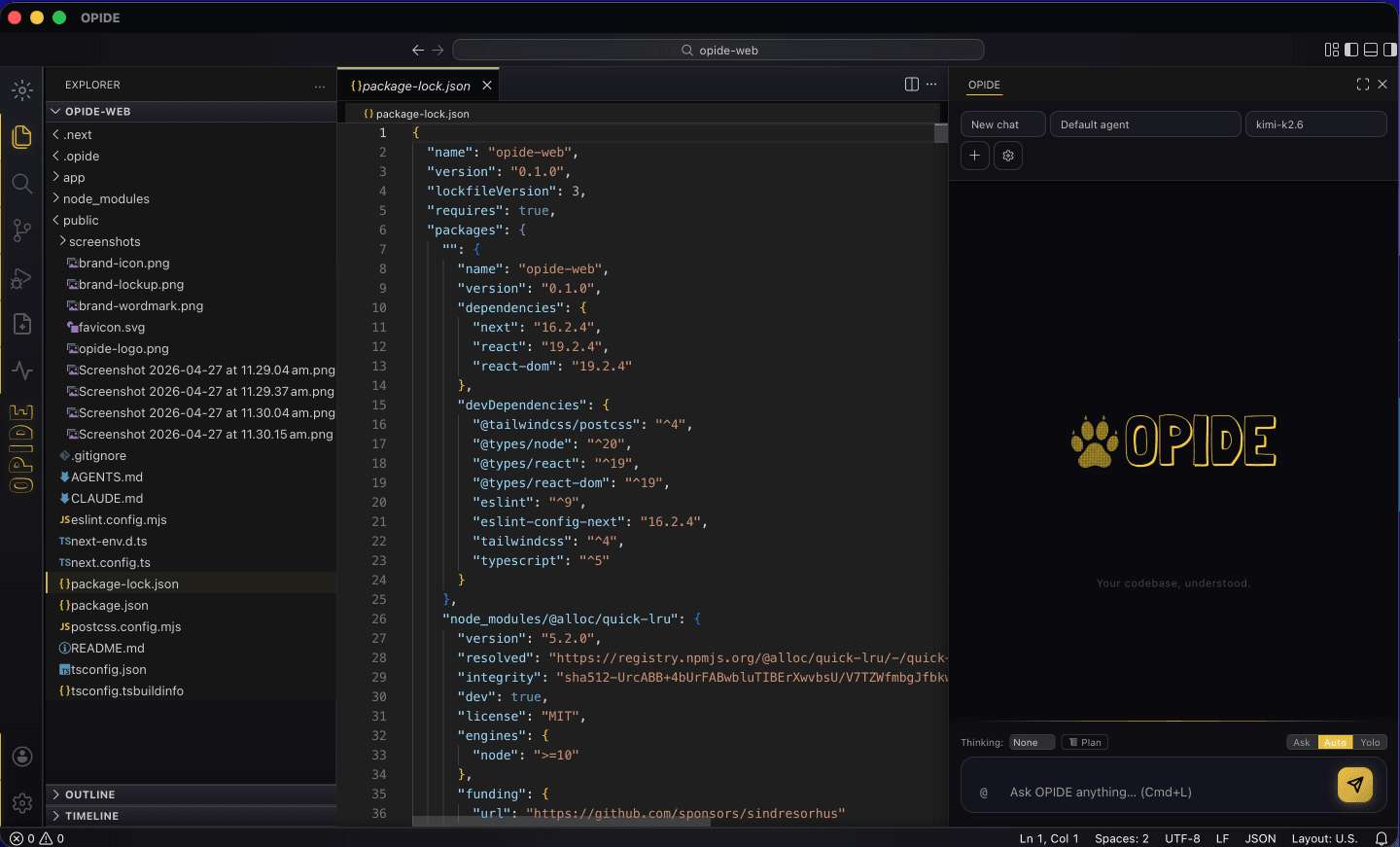
10 AI providers — one IDE
Think.
Agents that coordinate — not just suggest
OPIDE runs specialist agents across 10 AI providers. Pick the right agent for the task — Coder, Researcher, Security, General — each with its own model, system prompt, and capability set. File edits, terminal commands, web searches, memory operations, all reported back in real time.
Remember.
Memory that works like yours does
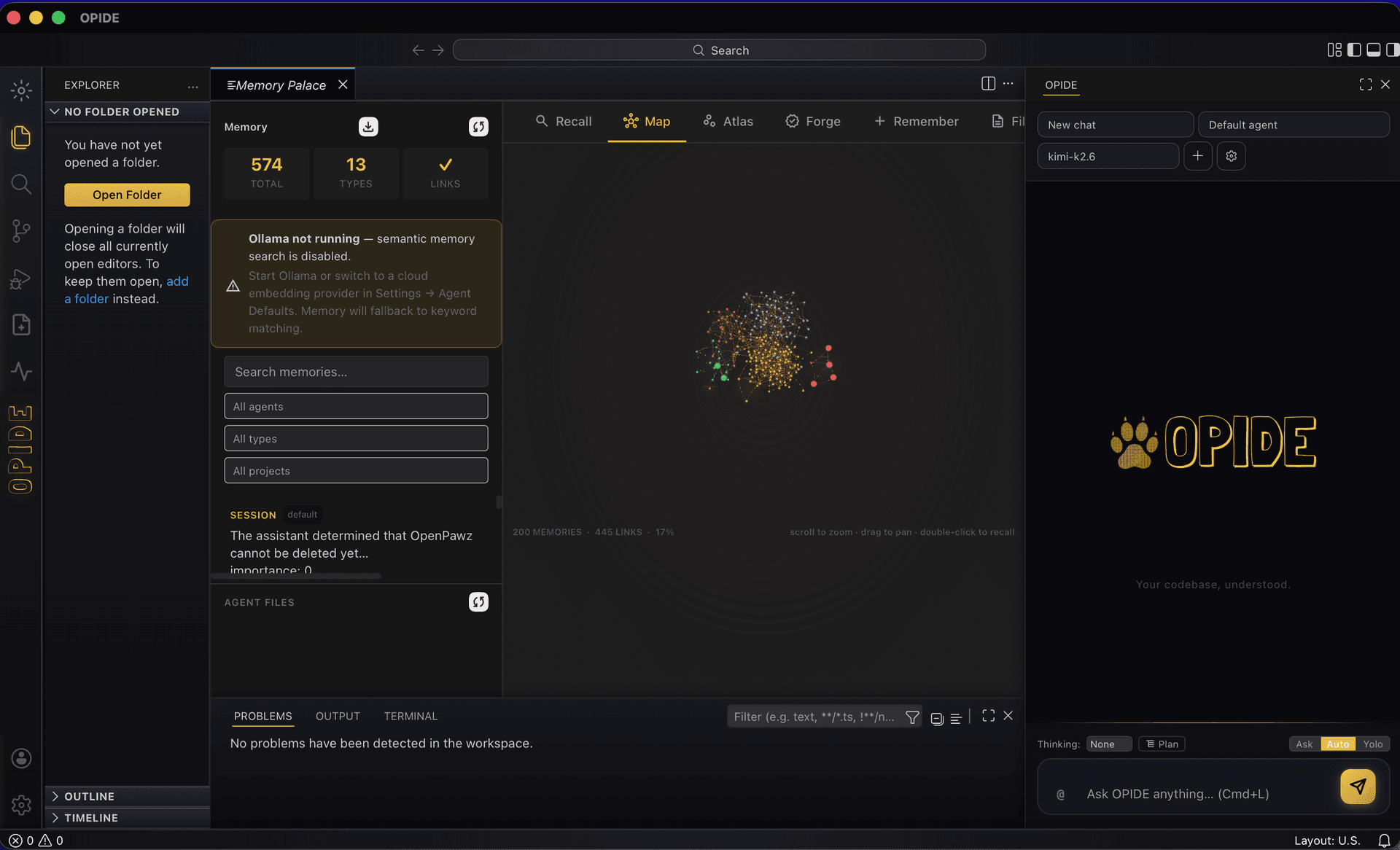
OPIDE's Engram system is a three-tier biologically-inspired memory: a sensory buffer for the current turn, working memory that decays with purpose, and a long-term graph of 574+ interconnected memories across 13 types. Agents recall what you were working on, what you decided, and why — without you having to repeat yourself.
Understand.
Your entire codebase — not just the open file
Tree-sitter AST indexing across 13 languages runs the moment you open a project. Every function, every call site, every dependency — indexed. Before any agent touches a file, it traverses the call graph and runs impact analysis: which callers are affected, which tests will break, which dependents need updating.
Engram Memory · The Memory Palace
Nothing like it exists in any other IDE.
Every other AI tool forgets you the moment you close a tab. OPIDE builds a living graph of everything you've worked on — linked, searchable, and surfaced automatically when agents need it. 574 memories. 445 links. Growing every session.
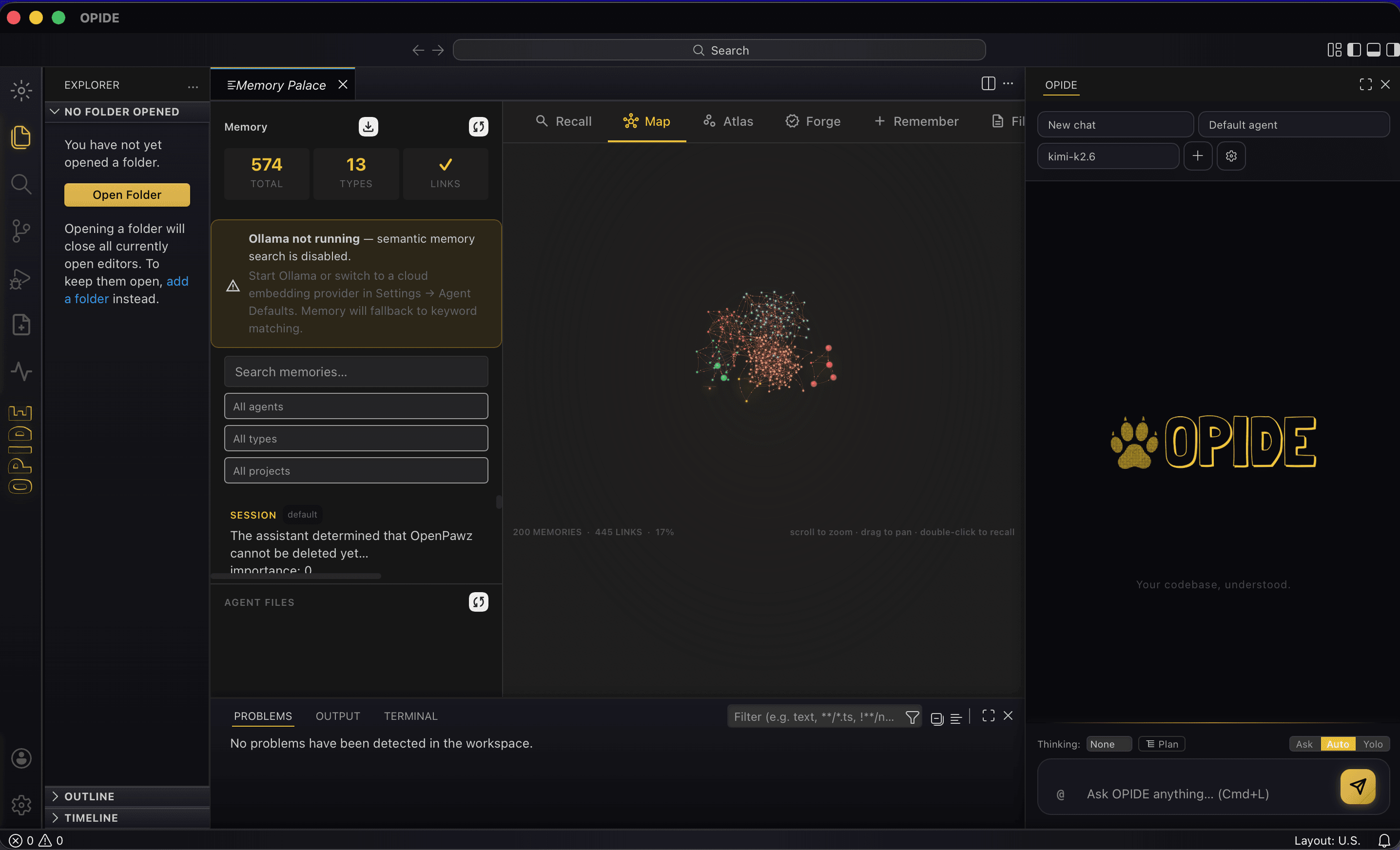
Recall
Semantic search across every memory
Map
Live neural graph of memory connections
Atlas
Scatter-plot of memory clusters
Forge
Create and pin structured knowledge
Remember
Manually capture what matters
Agent Trust Modes
You decide how much to trust it.
Three modes. Switched in one click. Because sometimes you want the agent on a leash, and sometimes you just want it to ship.
Full control.
Every tool call gets your approval before it runs. Nothing happens without you saying so. For when you want to understand every step.
Trust, but verify.
Safe operations run automatically — reads, searches, analysis. Destructive or irreversible actions pause and ask. The default for most developers.
Full send.
Every tool call auto-approved. No interruptions, no confirmations. The agent runs at full speed until it's done.
What makes it different
AI-native. Not AI-adjacent.
Every feature was designed alongside the AI layer — not bolted on after the fact.
Multi-Agent Orchestration
Specialist agents across 10 AI providers — Anthropic, OpenAI, Google, Ollama, DeepSeek, Grok, Mistral, OpenRouter, and more. Coder, Researcher, Security, General — each with its own model and capability set. Agents coordinate, not just suggest.
Engram Memory
Biologically-inspired 3-tier memory: sensory buffer → working memory → long-term graph. Recall, Map, Atlas, Forge, Remember — your context never vanishes between sessions.
AST Code Intelligence
Tree-sitter indexing across 13 languages. Call graph traversal and impact analysis let agents reason about your entire codebase — not just the open file.
Security-First Architecture
10 security layers: sandboxed execution, AES-256-GCM PII encryption, OS keychain integration, circuit breakers, GDPR compliance, and audit trails — all on by default.
Built from Scratch in Rust
~150K lines of Rust, zero legacy baggage. Tauri 2.x + Tokio runtime. Not a wrapper — a cohesive system designed for AI from day one.
Open VSX Extensions
OPIDE uses Open VSX — the open-source extension registry. Not the proprietary VS Code marketplace. Every extension, your way.
Built different
Every other IDE bolts AI on. We didn't.
The bolt-on approach
OPIDE
Resets every conversation. Paste your context back in. Every. Time.
574+ memories persist across sessions. Agents know what you did yesterday.
One AI call. One response. Repeat.
Configurable specialist agents — Coder, Researcher, Security, General — each with their own model, system prompt, and capability set.
The open file, maybe a few neighbours.
Full AST index. Call graph traversal. Impact analysis before any edit lands.
A proprietary marketplace you don't control.
Open VSX — the open-source registry. No gatekeeping.
A legacy editor with AI bolted to the side.
150K lines of Rust. Built for the AI era from day one.
See it in action
Built for the way you work
Memory Palace
574 memories across 13 types, mapped as a live neural graph. Context that persists across every session.
Live Activity
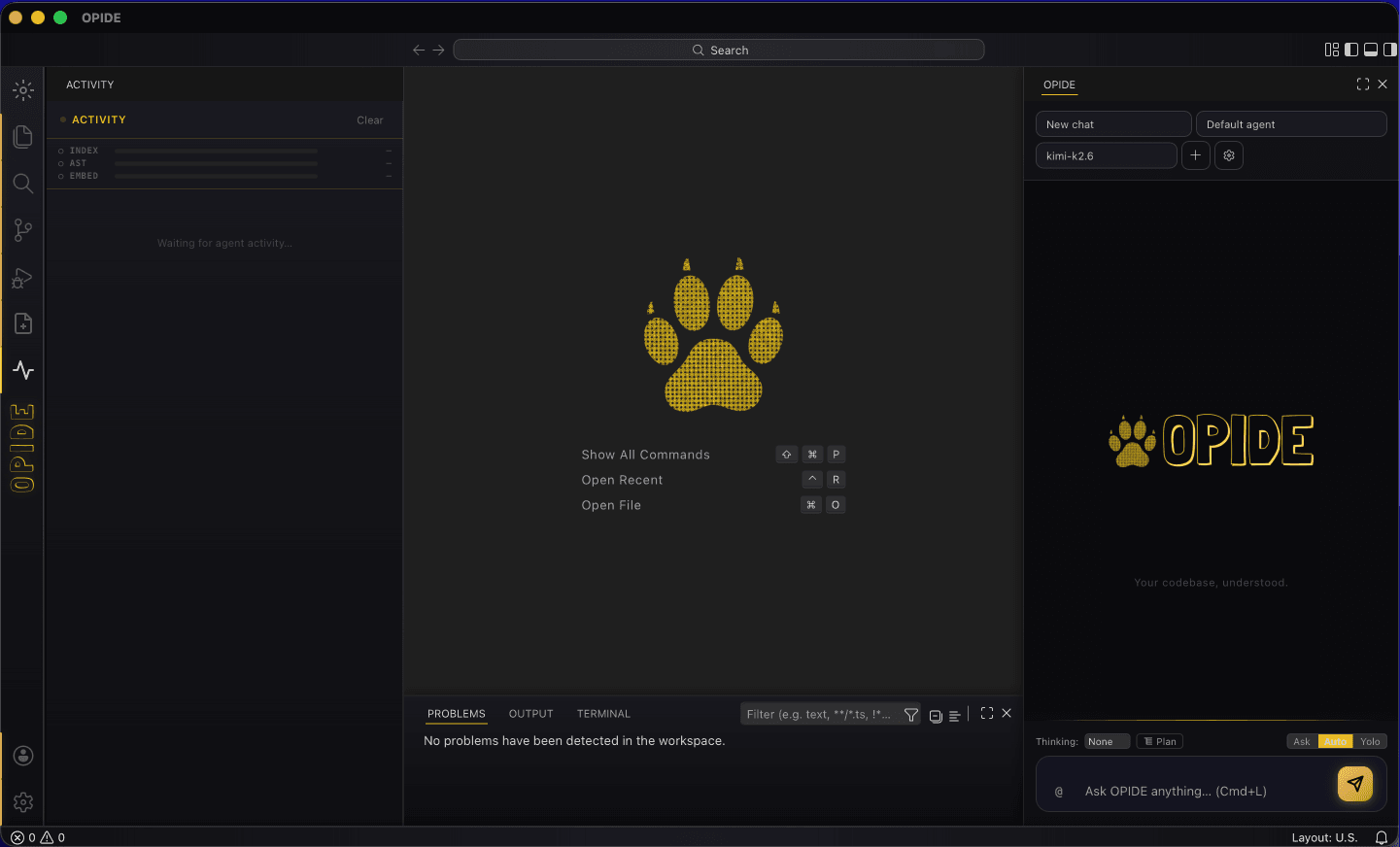
Watch INDEX, AST, and EMBED pipelines run in real time as agents work through your codebase.
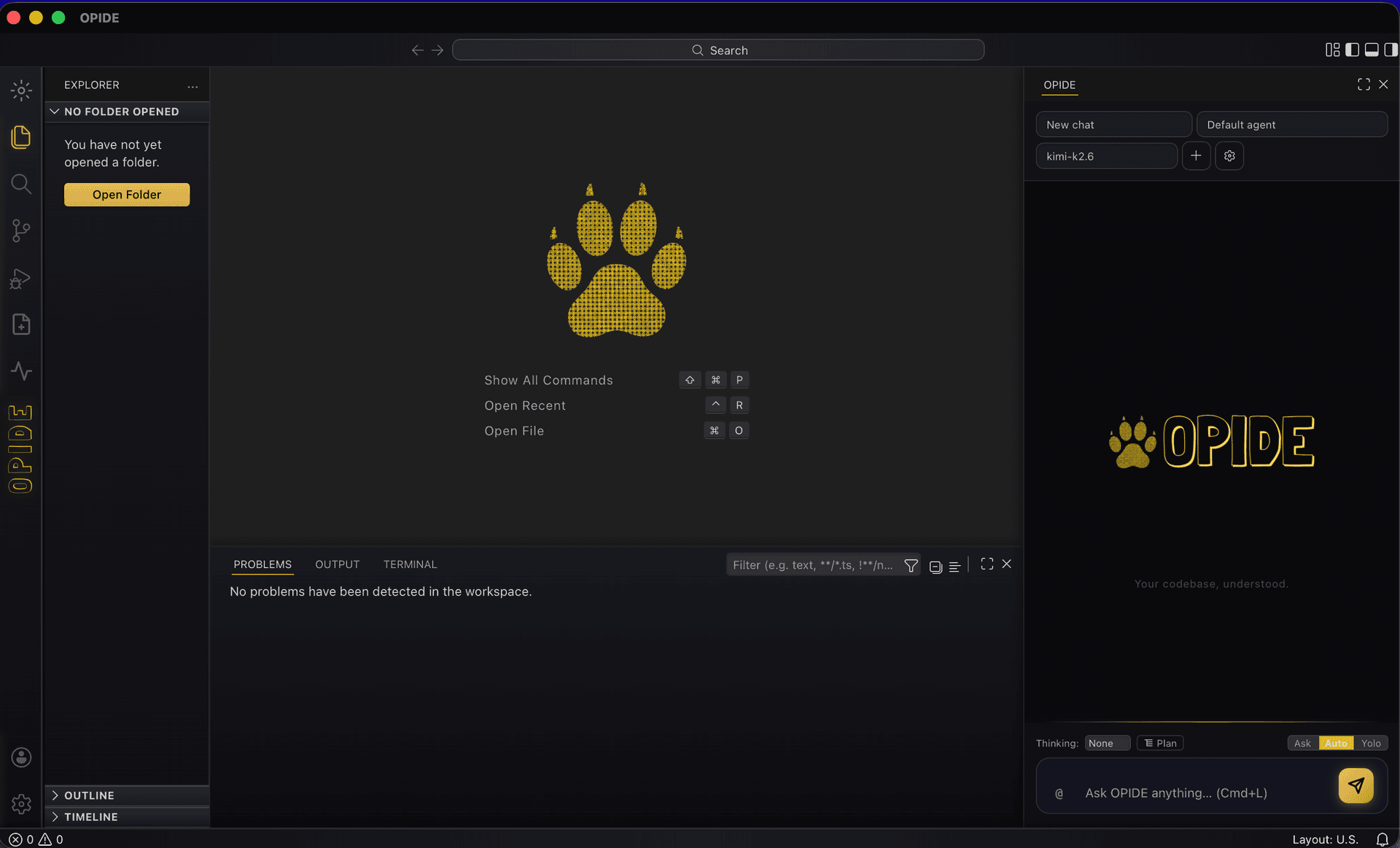
Clean by default
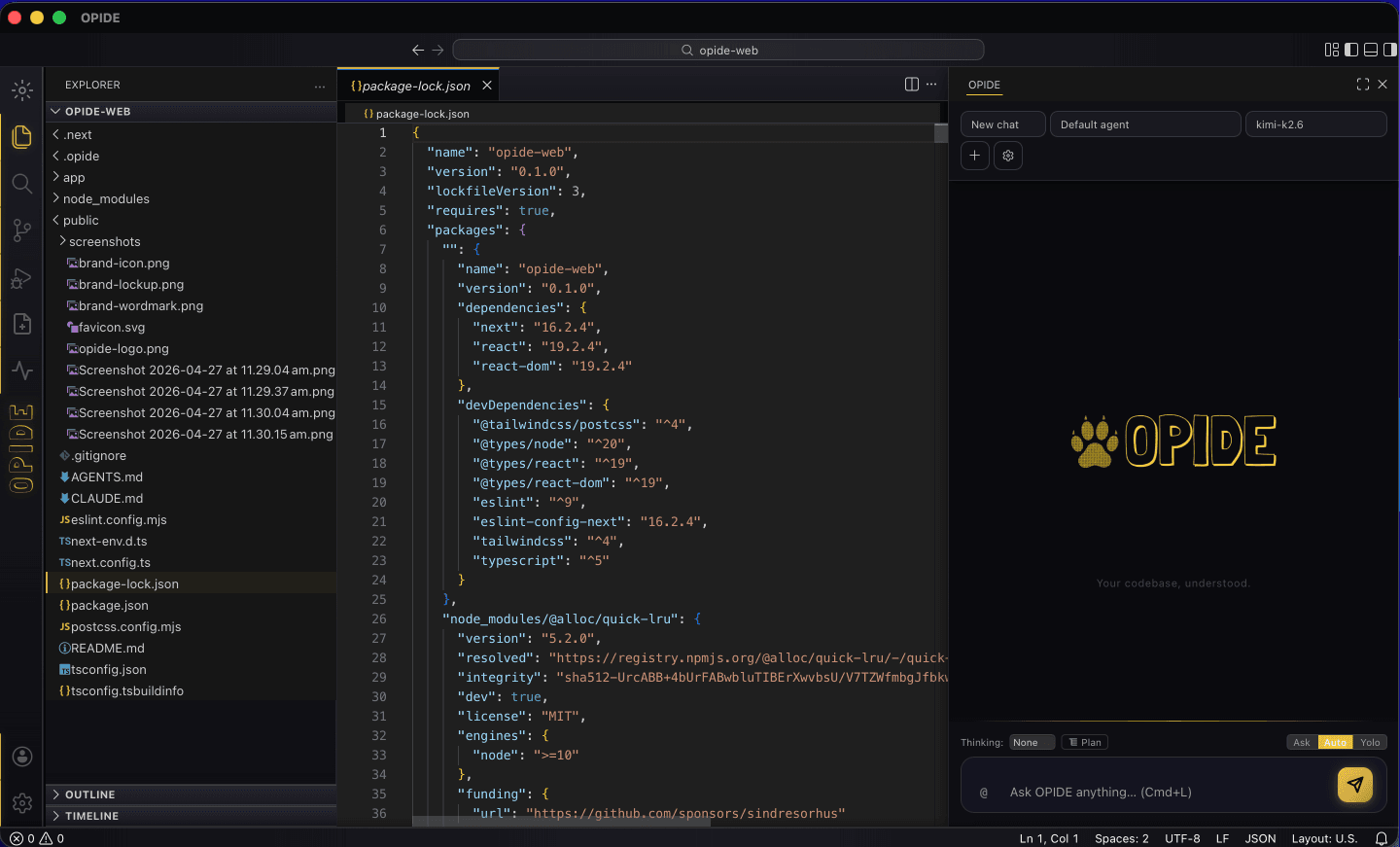
The AI panel lives alongside your editor — always available, never in the way.
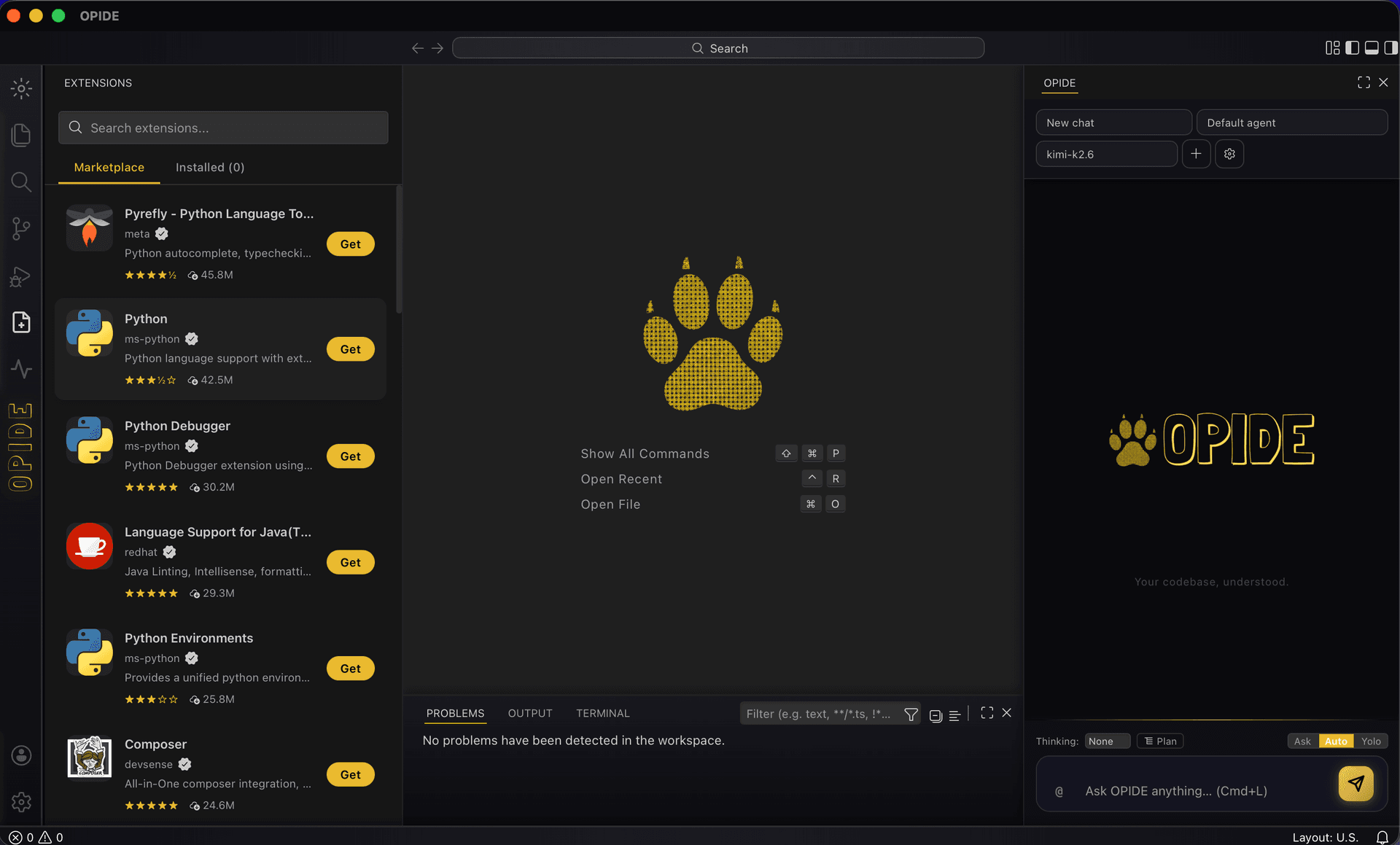
Open VSX Extensions
OPIDE uses Open VSX — the open-source extension registry, not the proprietary VS Code marketplace.
How it works
A system that reasons about your code
OPIDE doesn't generate text at a cursor. It builds a mental model of your project, remembers your decisions, and coordinates specialized agents to execute non-trivial tasks end-to-end.
Ask in natural language
Describe what you need — refactor, debug, explain, generate. OPIDE understands context, not just syntax.
Agents coordinate the work
Pick the right agent for the task — Coder, Researcher, Security, or General. Each has its own model, system prompt, and capability set. Switch agents from the chat panel in one click.
Engram keeps your context alive
Memory from past sessions flows into the current one. Agents know which files you were working in, what you decided, and why.
AST intelligence guides edits
Before touching any file, agents traverse the call graph. Impact analysis surfaces callers, tests, and dependents — changes land right.
Code at the speed of thought.
An IDE that thinks, remembers, and understands your codebase. Free and open source. Available now for macOS.
Apache 2.0 · Built with Rust · by OpenPawz